



There is a cabinet in a lot of family kitchens that tells a quiet story. It holds three or four supplement bottles, each with the seal broken but the contents barely touched. One has a label that was carefully researched. Another came recommended by a fellow parent at school pickup. A third was an upgrade because someone online said the first two weren't the best brand. They all sit there, respectable and unopened, silently expiring.
If that cabinet sounds familiar, you are not alone. And the interesting thing is that the problem almost never has anything to do with which calcium supplement you chose.
Why the "Best Brand" Search Keeps Starting Over
Parents who care about their children's nutrition tend to approach calcium supplements the same way they approach buying a new school bag or signing up for enrichment classes: with research, comparison, and a genuine desire to get it right. That intention is admirable. But it can quietly become its own obstacle.
The search for the optimal calcium supplement for kids often leads to a cycle of purchasing, attempting, abandoning, and searching again. Each new bottle represents another good decision made in a moment of focus. The problem is that moments of focus don't maintain a habit. Routines do.
What the Research Loop Actually Looks Like
A parent opens a browser and types "best calcium supplements for kids." The results are detailed, often contradictory, and full of comparisons between forms of calcium, absorption rates, and ingredient sourcing. They buy a product. They give it to the child twice. The child resists. Life gets busy. The bottle moves to the back of the shelf. A few months later, the search starts again.
The bottles accumulate. The habit never forms.
The Real Question Behind All That Research
The question most parents think they are asking is: "Which calcium supplement has the best formulation?" The question they actually need answered is: "Which calcium supplement will my child actually take every single day without a battle?" Those two questions can have very different answers. And the second one matters more.
What Calcium Does During Childhood and Why Consistency Matters
Calcium is a mineral that plays a central role in the development of bones and teeth during childhood and adolescence. According to the National Institutes of Health, children aged 4 to 8 years require approximately 1,000 mg of calcium per day, rising to 1,300 mg per day for children aged 9 to 18 years. These are the years when bones are actively building density and structure.
Childhood and early adolescence represent what researchers sometimes call a critical window for bone development. The American Academy of Pediatrics notes that the skeleton continues to develop through the teenage years, and the calcium a child receives during this period contributes to the bone structure they carry into adulthood. No single week of supplementation drives that process. Steady, regular intake across months and years does.
A Practical Look at Calcium Supplement Formats for Kids
The format determines whether the supplement gets taken. Here is a plain comparison of the options most parents encounter.
|
Format |
Typical Delivery |
Child Acceptance |
Ease of Daily Use |
|
Calcium tablets |
Swallowed whole |
Often difficult for children under 8 |
Requires water and willingness to swallow |
|
Calcium chewable tablets |
Chewed like a hard candy |
Moderate; texture can be chalky |
Easier than whole tablets, but taste varies |
|
Calcium powder |
Mixed into food or drink |
Variable; can alter flavor significantly |
Requires preparation each time |
|
Calcium liquid |
Measured by dropper or spoon |
Taste-dependent; not always accepted |
Requires measuring, can be messy |
|
Calcium vitamin D3 gummies |
Chewed like a gummy candy |
Generally high; familiar texture and taste |
Simple; kids often ask for them independently |
Format is the reason so many parents find, after months of trying different products, that the shift to gummies was the one that actually broke the cycle.
Why Gummies Changed the Routine, Not the Format
There is a particular moment many parents describe when they switch to calcium gummies for kids. It is not dramatic. It usually goes something like this: the first morning, the parent offers the gummy expecting the usual negotiation. The child takes it without comment. The next morning, the child asks for it before the parent remembers. By the end of the first week, the parent realizes something quietly significant has happened. The supplement is no longer a parenting task. It has become part of the morning without anyone having to enforce it.
That shift is worth examining, because it explains why children's gummy vitamins have become the dominant format for kids' supplementation despite offering no nutritional advantage over other delivery methods.
Why Children Accept Gummies Without Resistance
Children process new foods and supplements through a lens of familiarity and texture. Gummies occupy a category they already understand and enjoy. They are soft, chewable, and taste like something a child would choose. There is no unfamiliar swallowing sensation, no strong aftertaste, and no medicinal association. From a child's perspective, they are simply a pleasant thing that happens in the morning.
From a parent's perspective, the absence of resistance means the habit can actually form. Sustained nutritional support depends on showing up every day, and a format that creates no friction makes showing up easy.
How Routine Attachment Works in Practice
Behavioral research on habit formation consistently points to the same mechanism: new behaviors attach most reliably to existing anchors. Breakfast is one of the strongest anchors in a child's day. When calcium vitamin D3 gummies become part of the breakfast moment, alongside a glass of water or orange juice, they stop feeling like an extra task and start feeling like a natural part of the morning sequence. Parents who have made this switch often report that the child starts reaching for the gummies before the parent has even thought to offer them.
That is what a functioning supplement routine actually looks like. It does not require daily reminders or parent energy. It runs on its own.
Comparing Calcium Supplement Priorities: What Parents Often Weigh
When parents evaluate calcium supplements for kids, several considerations tend to come up repeatedly in conversations and online research. Understanding what each factor actually contributes can help clarify where to place the most attention.
Here are the most common priorities parents mention, and a realistic framing of each:
-
Calcium source and form: Calcium carbonate and calcium citrate are the two most commonly found forms in children's supplements. Both are well-recognized in nutritional literature. Calcium carbonate is typically found in gummies due to its stability in that format.
-
Vitamin D3 pairing: Vitamin D3 supports the body's ability to use calcium as part of normal bone metabolism. The European Food Safety Authority recognizes vitamin D as contributing to the maintenance of normal bones and teeth. Most calcium gummies for kids include vitamin D3 for this reason.
-
Sugar content: Many parents review sugar content when choosing children's gummy vitamins, which is a reasonable consideration. Comparing labels across brands is helpful here.
-
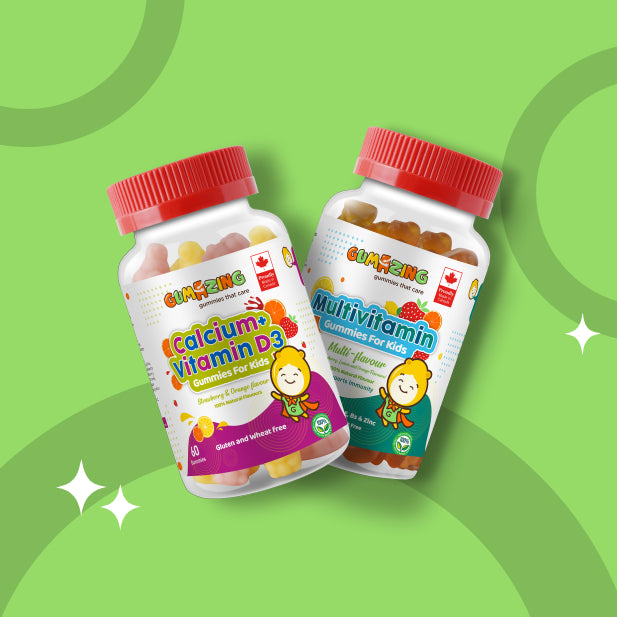
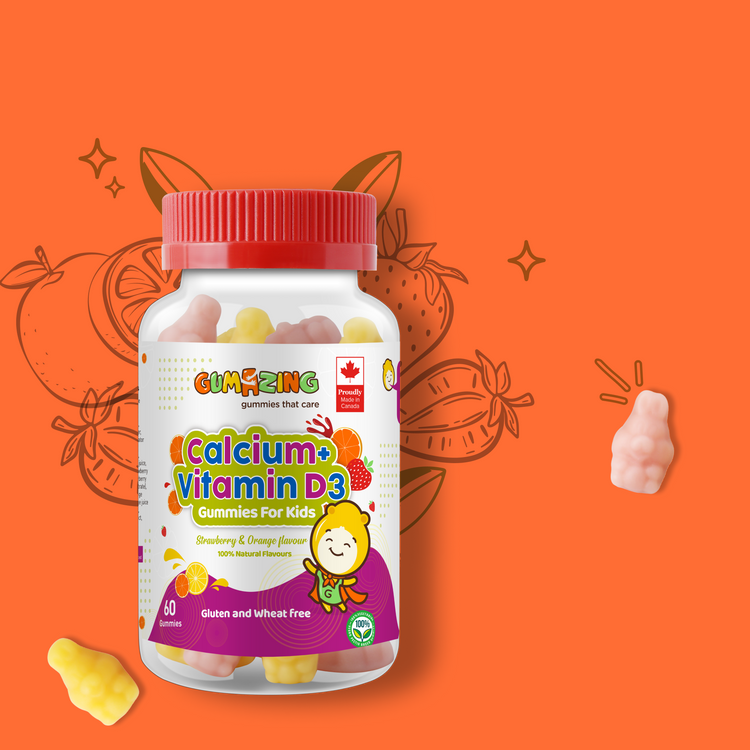
Halal or dietary certification: For families with specific dietary requirements, certifications such as Halal and non-GMO verification matter. Gumazing Calcium and Vitamin D3 Gummies carry Halal certification, which some parents specifically look for when choosing calcium supplements.
-
Age-appropriate dosage: Children's supplement dosages differ from adult recommendations. Labels should specify the recommended age range and serving size clearly.
Prioritizing these factors in order makes the selection process much more manageable. Format and acceptability come first. Everything else is evaluated within that constraint.
Building a Supplement Habit That Lasts Beyond the First Bottle
The goal is not to find a supplement that you feel good about purchasing. The goal is to find one that your child will still be taking six months from now. Those are meaningfully different targets, and keeping the second one in view changes how you evaluate options.
A few practical observations from parents who have built lasting supplement routines with their children:
-
Anchor the gummy to an existing daily moment, such as right after breakfast or just before the school bag goes on. Consistency in timing reinforces the habit faster than flexibility.
-
Keep the bottle somewhere visible. Out-of-sight supplements become forgotten supplements. A spot on the kitchen counter or beside the breakfast dishes works better than a drawer.
-
Let the child develop a small sense of ownership. When children associate the gummy with something they choose rather than something done to them, compliance is rarely an issue.
Supplement routines work best when they feel inevitable rather than effortful. The cabinet full of half-empty bottles is often a sign that each product was evaluated on merit but never integrated into life. Calcium vitamin D3 gummies tend to close that gap in a way that powders, tablets, and liquids rarely do, simply because children welcome them rather than resist them.
The broader lesson for parents who are still searching for the right calcium supplement is this: the best option is the one that actually gets taken. Start there, and the research question answers itself.


