


She was standing in the pharmacy aisle, holding two packs. The one in her left hand was a brand she had bought regularly in 2022, still on the shelf, largely unchanged. The one in her right was a current version from a brand she had been meaning to try. Same category, similar price point, and yet something on the label looked noticeably different.
The ingredient list was longer and more specific. A probiotic strain name she did not recognize was printed in small text near the bottom. The gummy base was pectin instead of the gelatin she remembered. And the total added sugar per serving was lower than she expected.
That quiet moment of comparison is one that more parents are experiencing in 2026 than in previous years. The children's gummy supplement category has undergone a series of real formulation shifts, and knowing what those changes actually mean is useful for any parent shopping for top vitamin gummies for kids 2026 with more than a colorful front panel to go on.
Why 2026 Gummies Look Different From What You Remember
The category has not changed overnight, but it has changed in consistent directions. Understanding what is driving those changes helps parents separate the substantive from the cosmetic before they reach for a new bottle.
Children's supplement brands face a persistent challenge: parents are more ingredient-aware than they were five years ago. Reading labels is no longer unusual behavior reserved for nutritionists. It has become a regular part of how families with school-aged children shop for any food or supplement product. In response, brands across the category have made adjustments, some meaningful and some primarily visual.
Formulation Refinements vs. Marketing Repackaging
A reformulation happens when a brand changes the actual ingredients, dosages, or delivery format of a supplement. A repackaging update changes the label design, front panel claims, or product name without significantly altering what is inside. Both happen regularly, and both can look identical from the front of a shelf.
The clearest way to tell the difference is to compare the Supplement Facts panel between an older and a current version of a product. Changes in nutrient form, the addition of named probiotic strains, or changes in inactive ingredients like binders and sweeteners all indicate actual reformulation. Changes limited to font, color scheme, and front panel language are repackaging.
How the Overall Category Has Shifted
Across the children's gummy supplement category as a whole, the movement from 2022 to 2026 has followed a few consistent directions: toward more specific probiotic inclusion, toward lower added sugar content, toward pectin-based gummy bases instead of gelatin-based ones, and toward more visible third-party testing disclosures. No single change defines the current market, but the combination of these shifts makes 2026 formulations meaningfully different from those available four years ago.
What Is Genuinely New in Top Vitamin Gummies for Kids 2026
The clearest way to understand what has changed is to look at the specific formulation choices that were uncommon in 2022 and are now increasingly standard across well-regarded children's multivitamins. The table below documents the most significant category-level changes relevant to parents comparing older and current products.
|
Formulation Element |
Typical Standard in 2022 |
Standard Increasingly Seen in 2026 |
|
Gummy base |
Gelatin (pork or bovine) |
Pectin (fruit-derived, halal-friendly, vegan) |
|
Vitamin D form |
Mix of D2 and D3 |
D3 (cholecalciferol) as standard |
|
B12 form |
Cyanocobalamin |
Methylcobalamin (a more active form) |
|
Probiotic inclusion |
Absent or generic "probiotic blend" |
Named strain (e.g., Lactobacillus acidophilus) with CFU count |
|
Added sugar per serving |
2 to 3 grams common |
1 gram or lower increasingly targeted |
|
Sweetener type |
Corn syrup, glucose syrup |
Tapioca syrup, organic cane sugar, or reduced sugar blends |
|
Artificial colors |
Present in many mid-market options |
Replaced with fruit and vegetable concentrates |
|
Third-party testing disclosure |
Rarely disclosed on label |
More frequently cited (USP, NSF, or similar) |
|
Iron in multivitamins |
Standard inclusion across age ranges |
Iron-free variants offered for age-appropriate formulas |
For parents who last bought a children's multivitamin before 2023, this comparison captures the practical differences they are most likely to notice on a current label. The changes in gummy base, vitamin form, and probiotic specificity are the three most substantive shifts worth understanding before selecting a new product.
The Shift Toward Cleaner Ingredient Lists
Beyond the active vitamins and minerals, the inactive ingredients in a gummy supplement include the binders, colors, sweeteners, and preservatives that hold the gummy together and give it its texture and flavor. These ingredients are not inert from a parent's perspective, and the changes happening in this part of the label reflect a meaningful category shift.
The term "clean label" has been common in adult supplement marketing for years and is now entering the children's supplement space more consistently. For parents evaluating 2026 products, cleaner inactive ingredients typically mean a shorter list with recognizable components. The most common changes showing up on current labels include the following:
1. Reduced or eliminated artificial food dyes. Where FD&C Red 40 or Blue 1 appeared in older formulations, current products more often use carrot, beet, or black currant concentrate for color.
2. Removal of synthetic preservatives like sodium benzoate in favor of natural antioxidant alternatives or modified packaging designed to extend shelf life without additives.
3. Replacement of glucose syrup or corn syrup with tapioca syrup or reduced amounts of organic cane sugar, which affects both sweetness level and total added sugar per serving.
4. More transparent coating agents. Carnauba wax, used to give gummies a non-stick surface, remains common but is now more frequently disclosed explicitly on the label rather than grouped under a generic ingredient umbrella.
What to Look for in the Inactive Ingredients
The inactive ingredient section appears below the Supplement Facts panel and is often overlooked. In 2026, this section is where the clearest difference between a meaningfully reformulated product and a refreshed-label product becomes visible. A current formulation that has genuinely been updated will typically show a shorter, more transparent inactive ingredient list alongside the active nutrient changes, not just a new front panel.
Probiotic Integration and What It Means in Practice
One of the most visible additions to children's multivitamin gummies in recent years is the inclusion of probiotic cultures alongside the standard vitamins and minerals. Understanding what that addition actually represents helps parents evaluate whether it is relevant to their family.
In 2022, most children's multivitamin gummies did not include probiotic cultures. Those that did often listed a generic "probiotic blend" without naming the specific strain or providing a colony-forming unit count. In 2026, a growing number of multivitamin gummies include at least one named probiotic strain alongside the standard vitamin and mineral profile.
Strain Specificity in 2026 Formulations
A named probiotic strain is more informative on a label than a generic blend because different strains of bacteria have different characteristics and associations in nutritional science. Lactobacillus acidophilus and Bifidobacterium longum are among the most studied strains in pediatric nutrition research, and both are now appearing by name in current children's gummy formulations rather than being grouped under a catch-all label.
For parents evaluating products with probiotics included, the key details to look for are the strain name (not just the genus but the specific species), the CFU count at time of manufacture or expiration, and whether the strain is stable in gummy form at room temperature. Heat-sensitive strains can lose viability if not adequately protected during manufacturing and storage, which is why some brands have begun developing gummy formulations designed with probiotic stability specifically in mind.
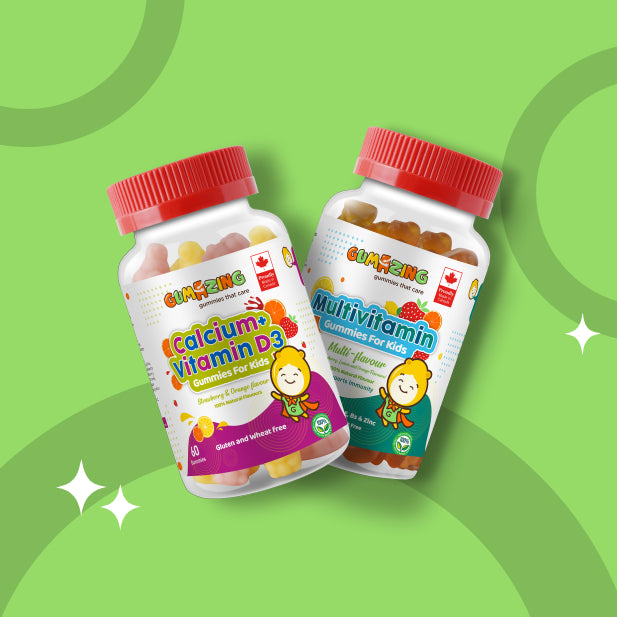
Gumazing Multivitamin and Probiotics Gummies are formulated to include both a comprehensive vitamin and mineral profile and a named probiotic, placing them within the 2026 direction of combined-function supplements rather than single-nutrient options. Parents who find managing multiple gummy products difficult often prefer the combined format for routine simplicity.
What the Sugar Conversation Actually Means in 2026
Sugar in children's gummies has been a consistent concern for parents and pediatric health professionals for several years. The 2026 category response to that concern is happening in two distinct ways, and understanding both helps parents evaluate current product claims more accurately.
The first response is reduction. The American Heart Association recommends that children aged 2 to 18 consume less than 25 grams of added sugar per day from all sources. That baseline has increased parent awareness of sugar content in supplementary products specifically. Many current children's gummy formulas target 1 gram of added sugar per serving or less, compared to the 2 to 3 gram standard common earlier in the decade.
The second response is substitution. Brands are replacing high-glycemic sweeteners with alternatives that carry different nutritional profiles. The table below outlines the most common sweetener types now found in children's gummies and the key consideration for each.
|
Sweetener Type |
Key Consideration for Parents |
|
Tapioca syrup |
Still a sugar; contributes to added sugar total. Cleaner sourcing than corn syrup. |
|
Organic cane sugar |
Conventional sugar from an organic source. Familiar, palatable, and widely tolerated. |
|
Erythritol |
Sugar alcohol. Low glycemic impact, but may cause digestive discomfort in higher quantities. |
|
Xylitol |
Sugar alcohol. Toxic to pets; keep products stored safely away from animals. |
|
Stevia (steviol glycosides) |
Plant-derived. No caloric contribution; some children find the aftertaste noticeable. |
What matters most for parents is palatability alongside content. Lower sugar gummies are sometimes less appealing to children, which can affect whether they are actually taken consistently. A supplement that meets the nutritional brief but sits untouched in the cabinet is not serving its purpose.
How Sweetener Choice Connects to Halal and Vegan Certification
For families following halal dietary requirements, the shift from gelatin-based to pectin-based gummies addresses the gummy base, but the sweetener also warrants review. Gelatin-free gummies made with pectin and sweetened without any animal-derived ingredients are more consistently suitable for halal and vegan households. The combined move toward pectin bases and cleaner sweeteners has coincided across the 2024 to 2026 period precisely because manufacturers are responding to the same set of consumer priorities simultaneously.
Should Parents Actually Switch Brands?
Knowing that the category has changed does not automatically answer the question most parents are actually asking, which is whether their current product is still a good choice or whether it is worth looking at newer formulations.
There is no universal reason to switch. A brand a child is already taking consistently and tolerating well is working in the most practical sense. Consistency with a supplement that meets the family's nutritional goals is more valuable than switching to a newer formulation and losing the habit in the process.
That said, a review of the current product makes sense in specific situations:
- The current product uses a gelatin base and halal or vegan certification matters to the family.
- The label does not disclose third-party testing and the family has become more interested in independent verification of label accuracy.
- The child has moved into a different age range and the current formula was designed for a younger age category with different dosage needs.
- A pediatrician has recommended a specific nutrient form, such as vitamin D3 specifically, that is absent from the current product.
- The current product includes a probiotic listed only as a generic blend, and the family wants the added transparency of a strain-specific formulation.
For families who decide to review their options, the combination of a clear vitamin and mineral profile, a named probiotic with a CFU count, a pectin gummy base, and a transparent inactive ingredient list represents what a well-formulated children's multivitamin looks like in 2026. Comparing labels with those four elements in mind is a more reliable method than relying on front panel claims alone.


