



The pediatric dentist was thorough. She checked each tooth, noted the development of the molars, and then, on her way to the instruments, asked how much milk the child was drinking each week.
The answer was approximate. Two or three glasses, maybe. Sometimes more. The dentist nodded without concern and mentioned that calcium intake in the early years was worth keeping consistent, given how actively bone and tooth tissue developed between ages four and ten.
The appointment ended normally. But on the drive home, the parent realized she had been thinking about calcium in exactly one way for her child's entire life: a glass of milk. She did not know the daily amount a child that age actually needed. She had never thought about the connection between calcium and vitamin D3. She did not know what happened in the body when calcium was consumed and whether it was actually absorbed.
She decided to look into it properly. This blog follows what she found.
Why Calcium Comes Up at Unexpected Moments
Calcium is one of those nutrients that parents know is important without necessarily knowing why, how much, or what affects whether it actually reaches the bone and tooth tissue where the body uses it. Dental check-ups, school health assessments, and conversations with family health professionals are often what turn vague awareness into a real question.
The dental connection is a direct one, even if it is rarely the first thing parents associate with calcium. Calcium is the primary mineral component of hydroxyapatite, the crystalline structure that forms tooth enamel and dentin, as well as the bone matrix throughout the growing skeleton. A child's teeth and bones are not static: they are actively mineralizing and developing throughout childhood and well into the teenage years.
What the Development Window Actually Means
The National Institutes of Health notes that approximately 90 percent of peak bone mass is established by the end of adolescence. Childhood and the teenage years are the period during which dietary calcium intake contributes most directly to building that foundation.
This does not mean every child requires a supplement, or that inconsistent calcium intake in early childhood causes irreversible effects. It means that understanding how much calcium a child actually needs, and how vitamin D3 affects whether the body absorbs it, is genuinely useful knowledge for any parent making day-to-day food and supplement decisions.
What Calcium Does in a Child's Body
Calcium is the most abundant mineral in the human body. In children, it serves two broad categories of role: structural and functional.
As a structural mineral, calcium is the primary component of hydroxyapatite, the mineral matrix of bones and teeth. Growing children incorporate calcium into bone tissue continuously as the skeleton develops in length and density. Teeth similarly rely on calcium as a core structural component during formation throughout early childhood and into adolescence.
In functional roles, calcium participates in nerve signal transmission, muscle contraction including cardiac muscle, and normal blood clotting. These functions require circulating calcium within a narrow serum range, which the body maintains as a priority.
How the Body Responds When Intake Is Inconsistent
When dietary calcium intake is sustained below what the body needs to meet both structural and functional demands, the body draws on calcium stored in bone to maintain serum calcium levels. This is a normal regulatory mechanism, not an acute emergency response, and it is the reason that nutritional guidance focuses on consistent daily calcium intake rather than high-dose intermittent consumption.
For parents, the practical implication is that reliable daily intake from food sources, supplemented where dietary gaps exist, is more relevant than occasional very high intake. Consistency across the week matters more than a single day of high calcium food followed by several low ones.
The Daily Calcium and Vitamin D3 Requirements by Age
The National Institutes of Health Office of Dietary Supplements publishes Recommended Dietary Allowances (RDAs) for calcium and for vitamin D3 that are the most cited pediatric nutrition benchmarks globally. Because calcium and vitamin D3 function as a pair in absorption (explained in the next section), the table below presents both together.
|
Age Group |
Calcium RDA (NIH, 2023) |
Vitamin D3 RDA (NIH, 2023) |
Calcium Tolerable Upper Limit |
Key Development Context |
|
1 to 3 years |
700 mg per day |
600 IU (15 mcg) per day |
2,500 mg per day |
First teeth fully present; early bone length development |
|
4 to 8 years |
1,000 mg per day |
600 IU (15 mcg) per day |
2,500 mg per day |
First permanent molars emerge; calcium needs rise significantly from toddler levels |
|
9 to 13 years |
1,300 mg per day |
600 IU (15 mcg) per day |
3,000 mg per day |
Adolescent growth acceleration begins; this is the highest-requirement period |
|
14 to 18 years |
1,300 mg per day |
600 IU (15 mcg) per day |
3,000 mg per day |
Bone mineral density continues to consolidate through mid-adolescence |
Source: National Institutes of Health Office of Dietary Supplements. Calcium Fact Sheet for Health Professionals (2023); Vitamin D Fact Sheet for Health Professionals (2023).
For a five-year-old, the daily calcium requirement according to the NIH is 1,000 mg per day, and the daily vitamin D requirement is 600 IU (15 mcg) per day. These are the figures most pediatric nutrition guidance references, and they are the benchmark any parent can use to evaluate whether their child's current diet and supplement routine is likely to cover the requirements.
Singapore's Health Promotion Board (HPB) publishes Recommended Dietary Allowances broadly consistent with international benchmarks, with calcium recommendations of 500 to 800 mg per day for children aged 1 to 10, and 800 to 1,000 mg for ages 10 to 18. The HPB recommends food sources as the primary route, with supplementation as an addition where dietary gaps exist.
Why Calcium and Vitamin D3 Are Almost Always Paired
Of all the pairings in children's nutrition supplements, calcium and vitamin D3 is the most consistently supported by nutritional science, and understanding the mechanism makes the combination sensible rather than simply promotional.
Vitamin D3 (cholecalciferol) is converted in the body through two steps: first in the liver to calcidiol, and then in the kidneys to calcitriol, its active form. Calcitriol stimulates the production of calcium-binding proteins in the cells lining the small intestine. These proteins are what allow the intestinal wall to transfer calcium from food or a supplement into the bloodstream.
Without adequate vitamin D, the intestinal cells produce fewer calcium-binding proteins, and a lower proportion of consumed calcium is absorbed. Research published in the Journal of the American College of Nutrition (Heaney et al., 2003) found that calcium absorption efficiency varies significantly across the range of vitamin D status, with adequately vitamin D-sufficient individuals absorbing a meaningfully higher proportion of consumed calcium than those with lower vitamin D levels.
Vitamin D in Singapore's Specific Context
Singapore's equatorial position means strong year-round UV radiation, which theoretically supports vitamin D synthesis through sunlight. In practice, UV avoidance behaviors including sunscreen use, covered outdoor areas, predominately indoor school and activity environments, and limited midday outdoor time during the hours of strongest UV mean that many children in Singapore synthesize less vitamin D from sunlight than the geography suggests.
Both the Health Sciences Authority Singapore and the HPB have acknowledged that vitamin D insufficiency is not absent in Singapore despite the equatorial climate. This makes the D3 component of a combined calcium and D3 supplement specifically relevant for Singapore families, beyond what it might be in populations with high outdoor midday sun exposure.
Getting Calcium From Food: What Covers the Requirement and What Falls Short
Food remains the primary and appropriate source of calcium for most children, and understanding which foods deliver meaningful amounts is the foundation of any calcium-aware daily routine.
|
Food Source |
Approximate Calcium per Serving |
Notes |
|
Plain milk, 1 cup (240 ml) |
280 to 300 mg |
Consistent across whole, reduced-fat, and skim varieties |
|
Yogurt, 1 cup (240 ml) |
300 to 400 mg |
Higher in set-style yogurts; values vary across brands |
|
Cheddar cheese, 30 g |
200 mg |
Concentrated source; also higher in saturated fat and sodium |
|
Fortified plant milk, 1 cup |
200 to 350 mg |
Varies by brand; added calcium listed on Nutrition Facts panel |
|
Firm tofu set with calcium sulfate, 100 g |
200 to 350 mg |
Only calcium sulfate-set tofu contributes significantly; other setting agents do not |
|
Canned sardines with bones, 80 g |
230 mg |
The bones are the calcium source; a relevant option for families who include oily fish |
|
Bok choy, 1 cup cooked |
160 mg |
High calcium bioavailability relative to most plant sources |
|
Broccoli, 1 cup cooked |
60 mg |
Useful as a contribution; not sufficient as a primary source |
|
Almonds, 30 g |
75 mg |
A useful addition to overall intake rather than a standalone source |
Source: USDA FoodData Central; Singapore Health Promotion Board nutrient data.
A child aged 4 to 8 with an NIH calcium requirement of 1,000 mg per day who drinks two cups of milk, eats a small serve of yogurt, and has bok choy at dinner is likely reaching 760 to 840 mg from those three sources. The remaining 160 to 240 mg comes from other foods across the day, or from a supplement where the diet consistently falls short.
When Food Alone May Not Reach the Daily Target
Several situations make consistent calcium intake through food alone more difficult:
-
Dairy avoidance or lactose intolerance removes the most calcium-concentrated food sources. Fortified plant milks and calcium sulfate-set tofu are the most practical alternatives, but require deliberate and consistent inclusion.
-
Selective eating patterns common in the 4-to-8-year age range often exclude dairy, cooked vegetables, and fish simultaneously, narrowing the available calcium sources significantly.
-
Vegan diets without well-planned calcium-rich alternatives to dairy can create persistent gaps that accumulate over months rather than days.
-
School canteen eating in Singapore, where children have limited control over food selection across the school week, can produce inconsistent calcium intake that is difficult to track or correct in the short term.
For parents in these situations, a calcium D3 supplement provides a daily baseline contribution alongside whatever food sources the child's diet includes.
What to Know When Choosing Calcium D3 Gummies for Kids
Not all calcium supplements deliver the same amount of usable calcium per serving. The form of calcium used in a supplement determines both the elemental calcium content (the proportion that counts toward the daily requirement) and the absorption conditions.
Calcium carbonate contains approximately 40 percent elemental calcium by weight, making it the most concentrated supplemental form. It requires stomach acid for efficient absorption and is best taken with food. It is the most commonly used calcium compound in children's supplements.
Calcium citrate contains approximately 21 percent elemental calcium. It does not require stomach acid for absorption, making it suitable for children with sensitive digestion or those taking supplements between meals. It is generally well tolerated but delivers less elemental calcium per gram of compound.
Algae-derived or marine-source calcium (sometimes labeled aquamin or microcrystalline hydroxyapatite) is used in supplements marketed as food-derived or natural calcium options. The nutritional function is comparable to other calcium forms; the distinction is primarily one of ingredient sourcing philosophy.
For parents evaluating calcium D3 gummies for kids, these are the label checks that produce the most useful information:
-
Elemental calcium per serving, not the total calcium compound weight. This is the figure that counts toward the NIH daily requirement.
-
Vitamin D3 specifically (cholecalciferol, not D2/ergocalciferol). Research including the systematic review by Tripkovic et al. in the American Journal of Clinical Nutrition (2012) found D3 to be more effective at raising circulating vitamin D levels than D2.
-
The gummy base: pectin for halal-compatible and vegan options; gelatin for conventional formulations.
-
Added sugar per serving. A gummy delivering calcium and D3 does not nutritionally require more than 1 to 2 grams of added sugar. Higher sugar content is a formulation choice.
-
Certification marks: halal certification from a recognized body (MUIS in Singapore), non-GMO verification, GMP manufacturing, or third-party testing disclosure each answer a specific question. Match them to what matters most to the household.
-
Age-appropriate dosing: confirm the elemental calcium per serving is proportionate to the child's age group rather than simply the maximum available dose. A serving providing 500 mg of elemental calcium may overshoot what is needed from a supplement for a child already consuming significant dietary calcium.
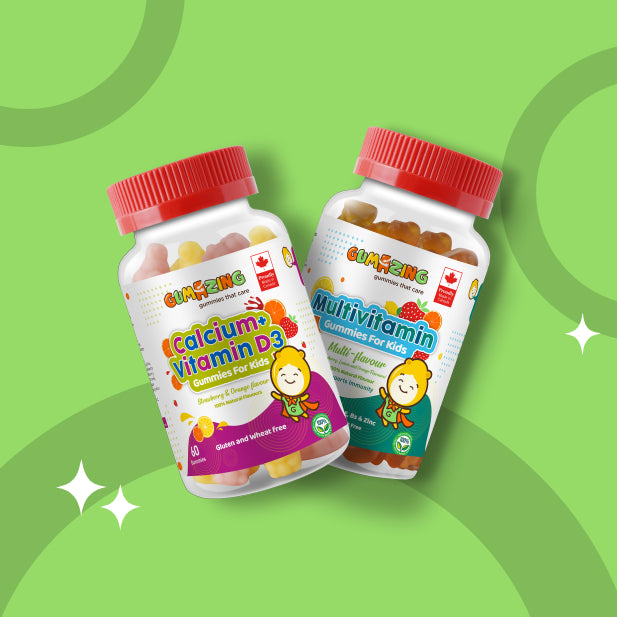
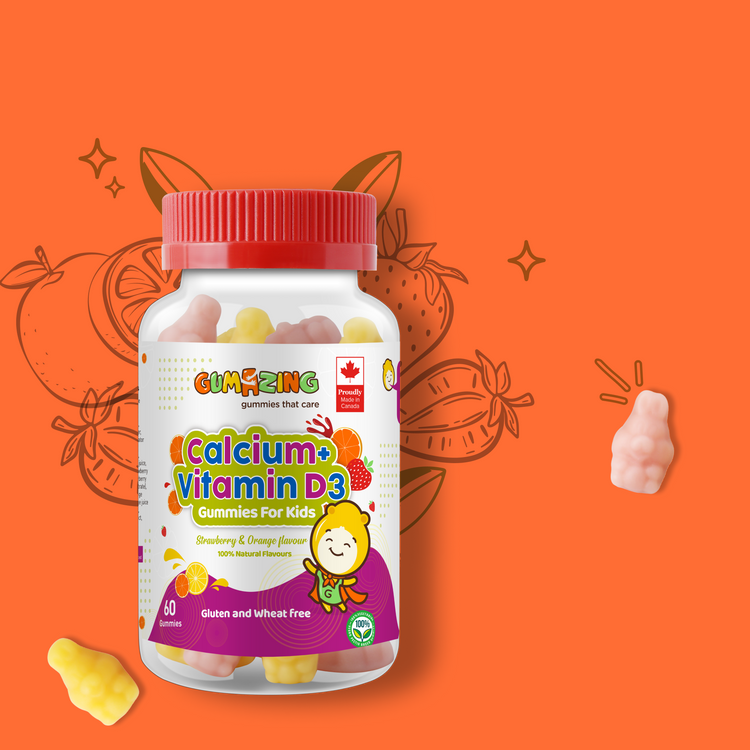
Gumazing Calcium and Vitamin D3 Gummies are formulated with a pectin base and disclose the elemental calcium and D3 content clearly per serving. They are halal-certified and non-GMO, covering the two most commonly raised dietary compliance concerns in Singapore households. The vitamin D is provided as D3 (cholecalciferol), consistent with current pediatric formulation standards.
The parent who left the dental appointment with a new question found, by the end of an afternoon of reading, that calcium nutrition for children is more specific and more manageable than she had initially expected. The daily requirement figures are sourced and verifiable. The D3 connection is a straightforward absorption mechanism. The gap between what a typical day of food covers and what a supplement contributes is calculable from a food label and a reference table.
She also found that a glass of milk is genuinely useful, and that it was never the whole picture.


